MS-2000
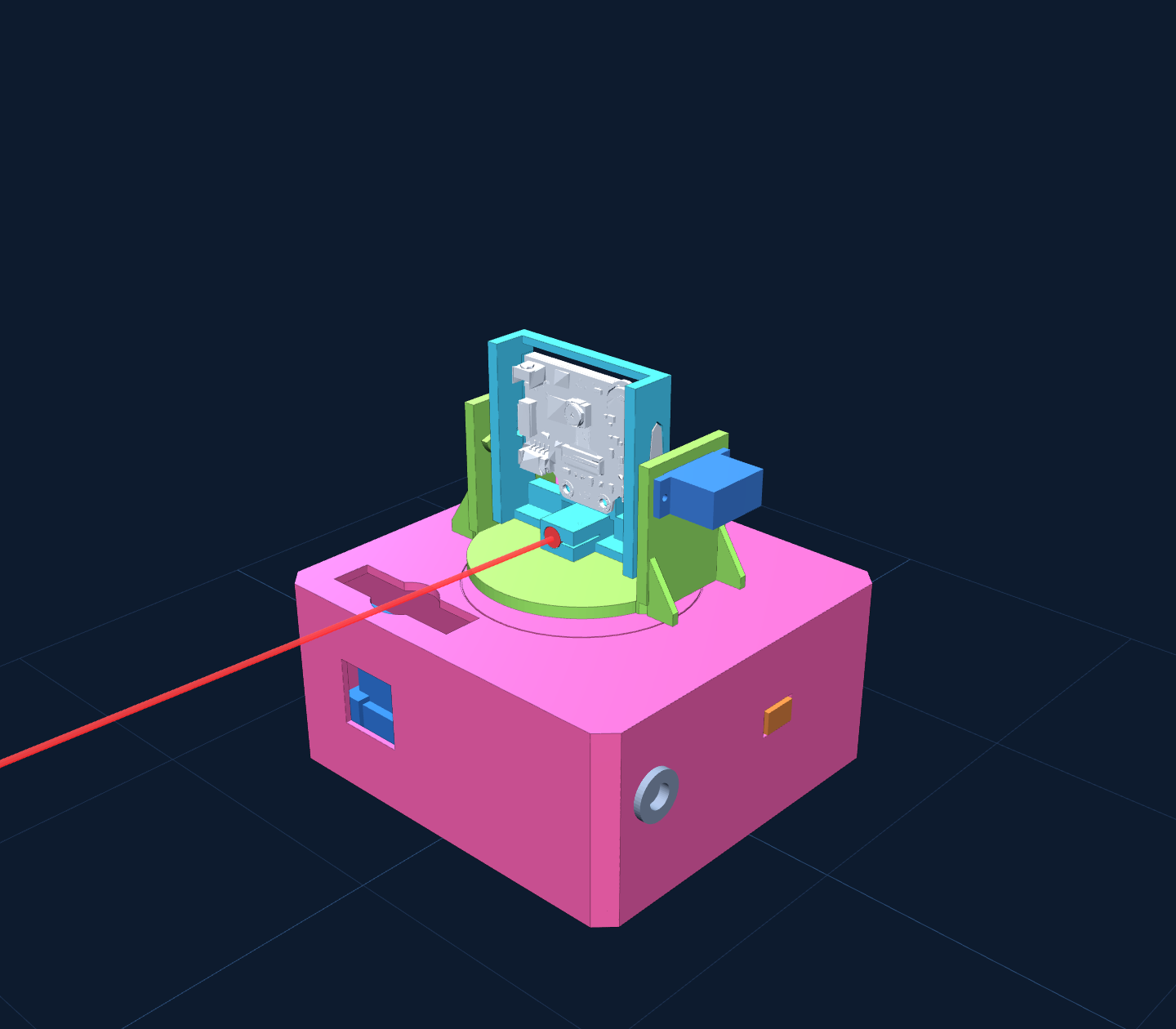
My invention: a laser turret that learns what a mosquito looks like, follows it, and tags it with a pew. The mosquito's eyes flash on every hit, and every hit is saved as data.
School due dates
St. Rose 3rd grade. Six parts, each graded on its own. The orange one is next.
- Part 1 · Wed Nov 18
Question
One question that a test can answer. It names what gets changed and what gets counted.
How to do it - Part 2 · Wed Dec 2
Research notes, bibliography, Catholic connection
3 to 5 research bullet points, 2 or 3 sources, and how the project connects to our faith.
How to do it - Part 3 · Wed Dec 9
Hypothesis
Your best guess before any test runs, and the reason for it. Plus the variables.
How to do it - Part 4 · Tue Jan 19
Conduct and complete experiments
All 30 runs done, written in the journal, with a photo of every setup.
How to do it - Part 5 · Mon Jan 25
Data, results, and conclusion
Averages, one bar graph for each test, and what the data says about the hypothesis.
How to do it - Part 6 · Mon Feb 1
Final project
The trifold board, the journal, and the MS-2000, all turned in.
How to do it
Where we are
The build plan, fitted around the school dates. Green is done, pink is now.
- Step 1 · Sep 15DoneBrainstormAir cannon, vacuum, and light beam ideas. The family picked lasers.
- Step 2 · Sep 15DoneRequirementsLaser, sound effects, a trainable mosquito on a fishing line, proven hits, and data it saves by itself.
- Step 3 · Sep 15DonePick a designAddie picked Design A, the Pan and Tilt Camera Turret.
- Step 4 · Sep 16DoneLock in the designDesign A locked. Still to do by hand: why Design A and a labeled drawing, both in the journal. Ask Miss Taggart about laser rules.
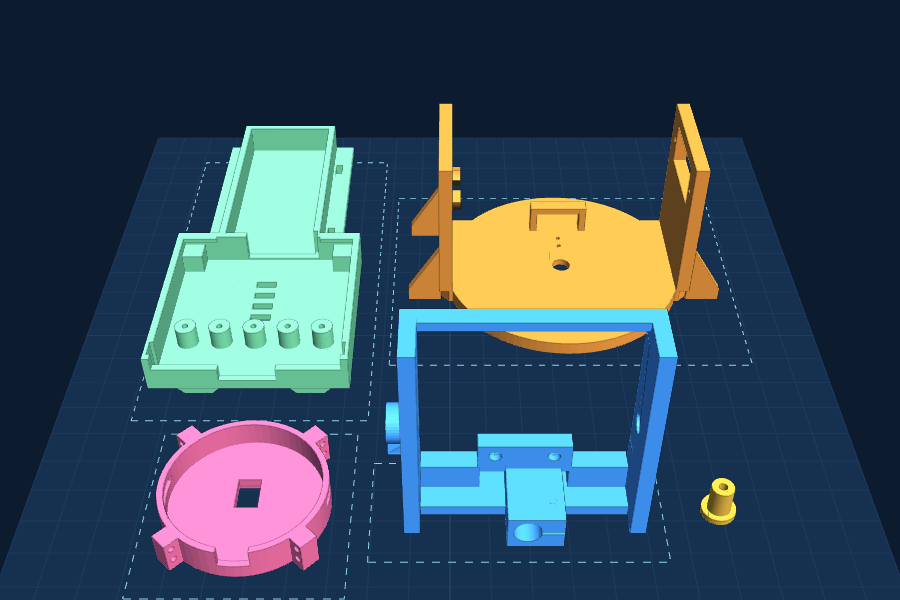
- Step 5 · Sep 16Done3D print design12 printed parts on five print plates, about 10 hours 45 minutes and 335 g of PLA. Checked with calipers when the parts arrive.
- Step 6 · By Sep 30NowOrder the partsAbout $224 from four stores: DFRobot, DigiKey, Adafruit, and Walmart, plus AAA batteries and craft supplies. Start the journal now.
- Step 7 · Oct 1 to Nov 13Print and buildMosquito and wand first, then the pan and tilt head, then the backdrop and pendulum, then the code and sounds.
- Step 8 · Nov 14 to Dec 11Teach the camera and practiceTrain the camera, pick the hit threshold, and make sure the data saves. The question (Nov 18), research (Dec 2), and hypothesis (Dec 9) are due at school in these weeks.
- Step 9 · Dec 12 to Jan 15ExperimentsSpeed and target size, all at 3 feet. 30 runs, one test per day, over winter break. Due Jan 19, so a few days are left for redos.
- Step 10 · Jan 16 to Jan 25Data and conclusionAverages, two bar graphs, and the conclusion. Due Jan 25.
- Step 11 · Jan 26 to Feb 1Board and demoTrifold board, finished journal, and the 30-second demo. Due Feb 1. Exhibition Feb 3 at 2:00 PM.
- Step 12 · Feb 25Archdiocesan fairIf the MS-2000 is picked as a St. Rose winner.
Rules to remember
Project pages
Fair guide
The six graded parts, what each one needs, the journal, the board, the judges, and the rubric.
Board and table
Two trifold layouts, what goes in each block, how it all fits on a 3 foot table, and print-outs for every title.
Build your own
For any kid: start with a micro:bit hit detector, then a camera tracker, then the full turret.
Learn the science
Mosquitoes, lasers, how a camera learns, servos, sensors, pendulums, and how to run a fair test.
Build the MS-2000
Everything to buy, the 3D printed parts, the 3D models, and the build steps.
Build guide
Step by step: every part, wiring maps, diagrams, and the MakeCode programs.
Changes and lessons
How we change a locked design safely, every change order, the project history, and what we learned.
The full plan
The design choices, the lethality math, the experiment rules, and the demo script.
Parts list (PDF)
Every part with a primary and a backup source, prices, and links. Print it for the order.
The turret
Build the MS-2000
The parts to buy, the 12 printed parts, the print plan, and the build steps. Built in October and November.
See the whole setup in 3D
The turret, the mosquito on its fishing line, the wand, the pendulum, and the backdrop. Spin it and use it to draw the labeled sketch for the board.
Open the 3D model